PAINTING · DUBLIN
Painting Dublin
Interior painting for homes, apartments, offices and commercial spaces—walls, ceilings, doors and trim, with repair, levelling and preparation treated as part of the final finish.
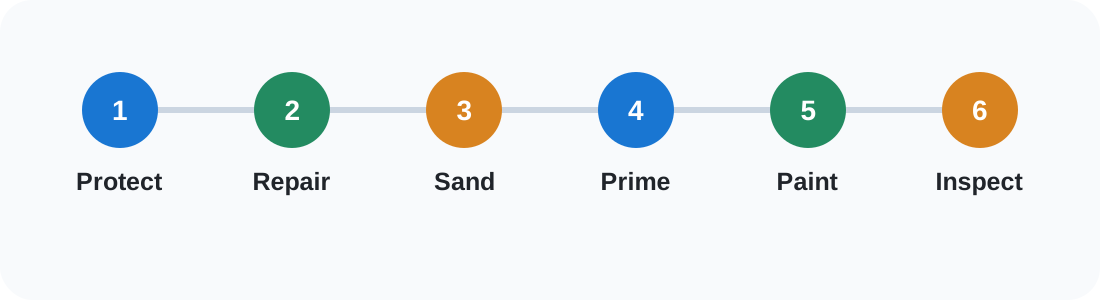
Protect → repair → sand → prime → paint → inspect.
Interior Painting Dublin: preparation is part of the finish
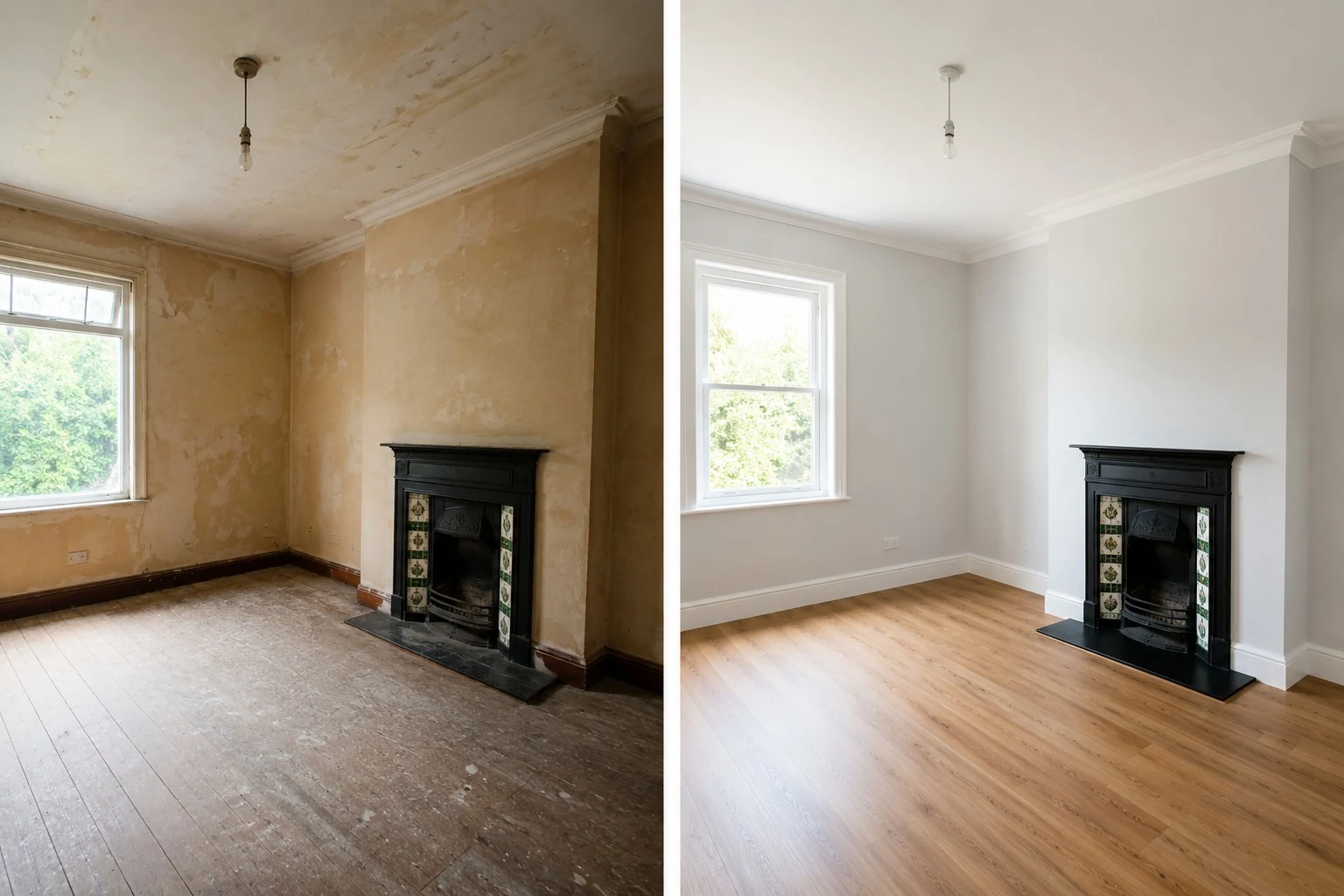
A room can look simple until strong daylight reaches the wall or ceiling. Old repairs, filler edges, hairline cracks, dents, previous roller texture, contamination, stains and poor adhesion can all remain visible after a new colour is applied. For that reason, we approach painting as a surface-finishing process. The existing surface is reviewed first, and the preparation level is agreed around the condition, visibility and expected result.
Some interiors need an efficient refresh. Others need much more correction before the coating stage. We do not use one preparation specification for every property; the work is matched to what the room actually needs.
Walls: repair, filling and surface correction
Wall preparation can include cleaning, removal of loose material, filling holes and dents, repairing damaged corners, feathering previous repairs and sanding uneven areas. Where old fixings, cracks or local damage are visible, the aim is to correct the base rather than simply bury the defect under more paint.
Very strong colours, low-angle daylight and flat modern walls can make small defects more obvious, so the level of correction should be discussed before work begins. Where movement, active moisture or an underlying substrate problem is suspected, cosmetic painting alone is not treated as the cure.
Ceiling painting and preparation
Ceilings deserve their own preparation plan because light often travels across them at a shallow angle. Joint lines, local filler, roller marks and patched areas can become obvious when the room is finished. We can prepare and paint ceilings in homes, offices and suitable commercial interiors, with attention to uniformity, clean edges and the transition between walls, ceilings, coving and trim.
Sanding and dust control
Sanding is used to level filler, soften repair edges, key suitable existing coatings and create a more consistent substrate before primer or topcoat. The abrasive and sanding method are chosen according to the surface and the stage of work. Excessive sanding can damage a weak surface just as easily as insufficient sanding can leave visible defects, so the process is controlled rather than performed mechanically without assessment.
Dust is removed before coating stages. Floors, furniture, fittings and adjacent finished surfaces are protected as appropriate, and masking is planned around clean lines without unnecessary damage to existing finishes.
Primers, sealers and problem surfaces
Primer is not automatically the same product on every wall. It may be needed for bare material, filler, stain control, adhesion, porous areas, repaired surfaces or a major colour change. The system is selected around the substrate and the problem being solved. Where a surface has contamination, moisture damage or adhesion failure, the underlying cause needs to be considered before the decorative finish is applied.
Paint systems, colour and sheen
We can work with standard manufacturer colours, agreed colour references and more individual colour schemes where a client or designer wants something less conventional. Matt, durable matt, eggshell, satin and other suitable interior finishes can be selected according to appearance, washability and expected wear. A hallway, bathroom, rental property, office and design-led living space do not necessarily need the same coating specification.
Dark colours, very light colours and changes between contrasting tones can alter how the surface reads under natural and artificial light. We therefore consider both colour and substrate quality when agreeing the required preparation.
Doors, skirting, architraves and detailed elements
Interior doors, frames, skirting, window boards, trims and selected joinery can be prepared and painted as part of the project. Where removable doors or panels would achieve a better result through controlled workshop spraying, that route can also be discussed instead of forcing every finish to be applied on site.
Residential painting in Dublin
For private clients, work can range from a single room or ceiling to a coordinated interior refresh. Clients can send photographs first, together with approximate dimensions, the current condition and the colour or finish they are considering. This helps us understand whether the project is mainly repainting or whether deeper surface correction is likely to be required.
Exterior painting for suitable surfaces
Where the substrate, access and weather conditions are suitable, exterior painting can also be discussed. The same principle applies outside: loose or failing material is dealt with first, the surface is prepared for adhesion, vulnerable areas are protected and the coating system is selected for the actual exposure rather than simply for colour.
Wall and ceiling levelling, joints and clean lines
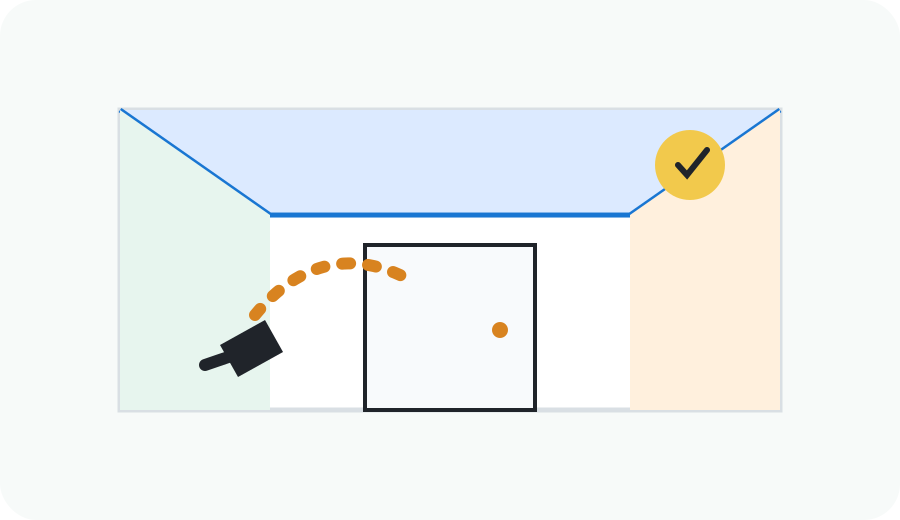
Where walls or ceilings need more than a repaint, preparation can include filling, local levelling, feathering repairs, correcting visible joints and refining transitions before primer and colour. Particular attention is given to the lines between walls, ceilings, coving, frames and trim. A sharp colour break only looks clean when the surface underneath and the edge itself are controlled.
Office, retail and commercial painting
Commercial interiors may need work planned around access, opening hours, drying time and the need to keep areas operational. Offices, hospitality spaces, retail units and other suitable premises can be approached in stages where required. For larger projects, the painting can also sit alongside joinery, metal, floor or other finishing work so the surfaces are treated as one refurbishment brief rather than unrelated tasks.
Interior refurbishment beyond paint
Painting is often only one part of bringing an interior back into good condition. Where appropriate, we can coordinate related finishing work around the same room—for example tile and stone restoration in kitchens, bathrooms and hallways, wood finishing, metal details and selected repair work connected to the finishing stage. Floor restoration is available as a separate specialist service when the project includes timber or parquet. The aim is to solve the visible surfaces coherently rather than treat every material as an unrelated job.
What we need for a painting quote
Send photographs of the rooms and close-ups of damaged areas, approximate dimensions, the current finish, any known moisture or adhesion issues and the colour or sheen you are considering. For larger Dublin projects, a site visit can be arranged when appropriate. If the exact specification is not clear yet, that is fine—we can discuss the surface first and work from the required result.
PAINTING SCOPE
A complete interior painting service, not four lines on a page.
Walls
Preparation, local repairs, sanding, priming and decorative coating for suitable residential and commercial walls.
Ceilings
Ceiling repair and repainting with attention to patched areas, uniformity, roller pattern and low-angle light.
Doors & trim
Doors, frames, skirting, architraves and selected joinery prepared and finished to suit the project.
Commercial interiors
Offices, retail, hospitality and other suitable spaces planned around access, staging and the required finish quality.
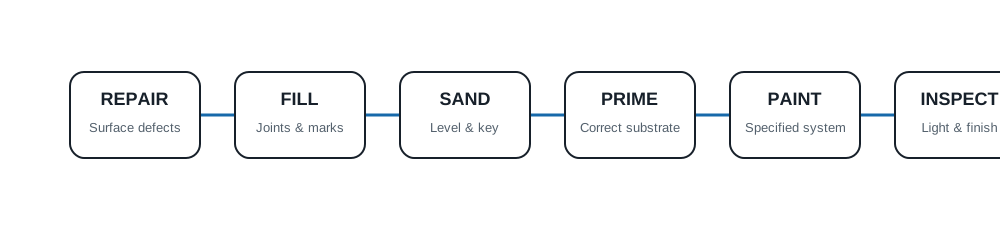
The final coat only looks as good as the stages underneath it.
CLEAN FINISHING
Repair, level, protect, paint and inspect.
Good painting is a sequence. Preparation and protection come first; colour comes later.

SPRAY PAINTING
Spray painting for selected walls, ceilings and interior details.
For suitable projects, spray application can be considered for walls, ceilings and selected interior elements where the substrate, access, masking and coating system make it the right method. It can be useful when a very even surface or a more refined sprayed appearance is required.
Spray work needs disciplined preparation: surrounding areas are protected, defects are corrected, surfaces are sanded and primed as required, and the coating is selected for the actual substrate. Gloss and higher-sheen finishes on large walls or ceilings are especially demanding because reflected light reveals imperfections, so the preparation standard has to rise with the sheen.
RELATED DUBLIN SERVICES
Painting can connect with the rest of the surface.
PAINTING DUBLIN