HIGH GLOSS FINISHING · DUBLIN

High Gloss Finishing Dublin

Deep, reflective high-gloss finishes for MDF, furniture, doors, joinery and suitable panels. The result is built through preparation, controlled coating, curing, fine sanding and polishing — not by simply applying a shiny topcoat.

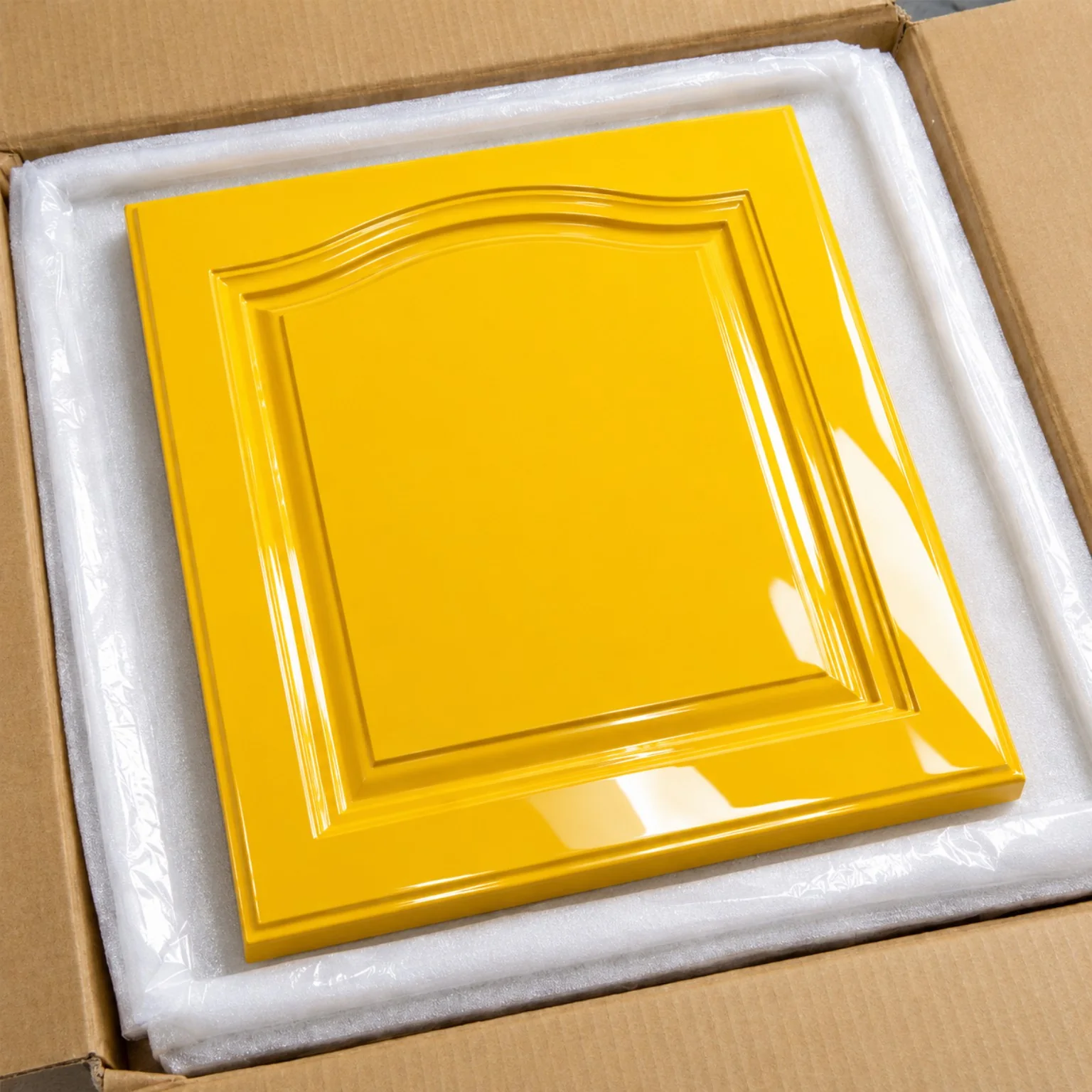
Yellow high-gloss finished panel showing a deep reflective surface

THE FINISH

High gloss starts underneath the colour.

A convincing high-gloss surface depends first on the substrate. Gloss exposes waviness, sanding marks, porous edges, sinkage and small defects that a matt finish can disguise. That is why the base is assessed and corrected before the decorative coats are built.

Good furniture-grade MDF is particularly suitable because it can provide a stable, uniform base when faces and edges are prepared correctly. Veneered, timber-based and previously finished components can also be considered, but they may require a different build, additional sealing or more corrective work depending on the construction and existing surface.

The specification is adjusted to the actual component rather than forcing every project through one fixed recipe.

HIGH GLOSS PROCESS

Build, level, colour, cure and polish.

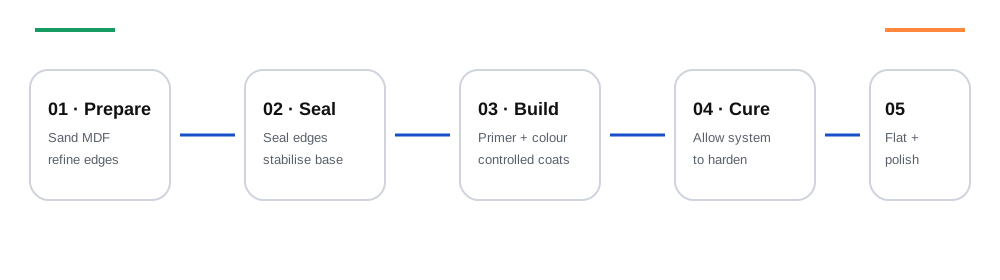
Some components need one primer build; others need two or more preparation cycles before the surface is ready for colour. Each stage is judged by the surface, not by a fixed coat count.

High gloss finishing process from substrate preparation and primer build through colour lacquer sanding and polishing

Primer build and progressive sanding

After initial preparation, suitable sealers and primers are used to stabilise the surface and create enough build for accurate levelling. Between coats the surface can be sanded again so that edges, repaired areas and broad faces become progressively more uniform. Where the substrate remains absorbent, uneven or technically demanding, additional primer cycles may be required.

For specialist work the coating build may include high-build or polyester-based primer systems where they are appropriate to the substrate and the intended finishing system. The purpose is not simply to make the coating thicker: it is to create a stable, level foundation that can be refined without losing edge definition or introducing unnecessary distortion.

Colour depth and clear lacquer

Colour is applied only when the base is ready. The number and type of colour coats depend on coverage, shade, coating system and the visual target. Deep colours and highly reflective finishes are particularly unforgiving, so consistency of film build, curing and cleanliness matters throughout the process.

Where the specification calls for it, a compatible clear lacquer can be built over the colour to provide additional depth and a surface that can be refined after curing. Not every job needs a separate clear coat; the correct system depends on the material, colour, use and required appearance.

Flattening, compound polishing and final refinement

Once the coating has cured sufficiently, the finish can be carefully flattened with fine, progressively controlled abrasives. This stage corrects suitable texture and small surface imperfections while preserving edges and geometry. Machine compounding and finer polishing stages then develop clarity, depth and reflection.

Polishing may be repeated with progressively finer compounds and pads until the required gloss level is reached. The final surface is inspected under directional light and from different angles for haze, sanding traces, local distortion, contamination and consistency of reflection.
SUBSTRATE & SPECIFICATION

The material determines how far the finish can be taken.

Furniture-grade MDF

A strong base for opaque high-gloss work when faces, machined edges and profiles are sealed and prepared correctly.

Veneer & timber-based panels

Construction, grain, porosity and veneer thickness must be assessed before deciding how much filling, sealing and sanding is appropriate.

Existing coated surfaces

Previous finishes are checked for adhesion and compatibility. A beautiful topcoat cannot compensate for an unstable layer underneath.

Colour & sheen development

From clean light colours to deep saturated shades, the coating build can be developed around the required colour, reflection and end use.

QUALITY CONTROL

Maximum gloss is a controlled result, not a single product.

The deepest high-gloss appearance comes from the relationship between substrate flatness, primer build, colour, optional clear lacquer, cure, abrasive refinement and final polishing. Skipping preparation usually becomes more visible as gloss increases.

For demanding furniture, cabinetry, feature panels and joinery, samples can be useful to establish colour, depth and sheen before the full project is completed. Edge treatment, visible faces and handling requirements are considered as part of the finishing specification.

Send photographs of the component, its approximate dimensions, material if known, existing condition and the colour or reference finish you want to achieve.

HIGH GLOSS FINISHING DUBLIN

Show us the component and the finish you want to achieve.

Request a quote