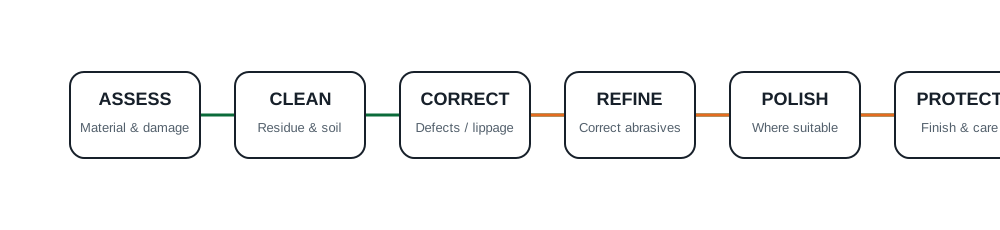
Tile restoration is not one process for every tile
Bathroom wall tile, kitchen floor tile, porcelain, glazed ceramic, terrazzo, marble, limestone and cement-based surfaces can look similar from a distance but react very differently to abrasives, chemicals and polishing systems. A proper restoration therefore starts by identifying the material and the type of damage. We do not apply a stone-polishing process blindly to a glazed ceramic tile, and we do not promise gloss where the substrate cannot safely be mechanically polished.
The objective may be to remove built-up residue, reduce scratching, correct dull patches, refine a natural-stone finish, restore clarity, improve consistency or simply return a hard surface to a cleaner and more controlled appearance.
Bathroom tile restoration
Bathrooms combine water, soap residues, mineral deposits, cleaning products, grout joints, silicone and changing ventilation conditions. Over time, the tile can become dull while grout lines darken or deposits build around wet zones. We assess walls and floors separately because a vertical glazed tile, a stone shower floor and a porcelain bathroom floor may each require a different treatment.
Where the material allows, restoration can include controlled mechanical cleaning, local abrasive correction, honing or polishing. Where abrasive polishing would damage a glaze or surface treatment, the process changes to cleaning, residue removal, local correction and appropriate finishing rather than forcing a polishing method onto the wrong substrate.
Mould, moisture and bathroom surfaces
Visible mould, organic growth or persistent blackening is not something we simply polish over. If moisture, failed sealant, ventilation or a leak is driving the problem, that cause should be addressed. Grout and silicone may require separate cleaning, replacement or remediation before cosmetic surface restoration makes sense. Our finishing work focuses on the tile and hard-surface condition; it is not a substitute for fixing an active moisture problem.
Kitchen floor tile polishing and restoration
Kitchens often combine heavy foot traffic, grease, food residues, chair movement and repeated cleaning. Natural stone and some suitable mineral surfaces can lose their original clarity or become unevenly dull. After assessment, the work may include deep cleaning, progressive abrasive refinement, honing and polishing through the appropriate stages, followed by a suitable protective treatment where the material calls for it.
For ceramic or porcelain surfaces, the approach depends on whether the finish is glazed, textured, through-body or factory polished. The right goal may be restoration and cleaning rather than creating a new gloss level that the original tile was never designed to have.
Hallways, entrances and high-traffic floors
Hallways and entrances frequently show traffic lanes before the rest of the floor. Dirt becomes embedded in texture, existing polished areas lose clarity and scratches become concentrated where people enter the building. We can assess residential hallways, apartment common areas and suitable commercial floors for cleaning, correction, honing, polishing or a combination of processes.
Natural stone: grinding, honing and polishing
Natural stone restoration is built progressively. Deeper marks or unevenness may require a coarser corrective stage, followed by finer diamond or abrasive steps to remove the previous scratch pattern. The surface can then be honed to a controlled matte/satin appearance or developed further toward a polished finish where the stone is suitable.
Skipping abrasive stages can leave haze, coarse scratches or an inconsistent reflection. The exact grit sequence is not fixed blindly in advance; it is selected around the stone, the starting condition and the required finish. Edges, corners and transitions are worked with appropriate smaller tooling where machine access is limited.
Porcelain and ceramic tile
Porcelain and ceramic require more caution because many tiles rely on a factory glaze, texture or surface treatment. Glazed ceramic is generally not treated like polishable stone. Some unglazed or through-body porcelain can be mechanically refined in suitable situations, while other surfaces are better restored through controlled cleaning and local correction. Test areas are useful where the response of the material is uncertain.
Grout lines and edge detailing
A restored tile can still look unfinished if the joints remain heavily contaminated or damaged. Grout is assessed as a separate material. Cleaning and detailing may be possible, but loose, failed or deeply stained grout can require repair or replacement rather than aggressive polishing. Silicone joints are also treated separately from the tile itself.
Concrete, cement tile and exterior paving
Cement-based surfaces, concrete and suitable exterior paving can also be mechanically cleaned or refined depending on their construction, existing sealer and condition. Exterior surfaces may need removal of organic contamination, traffic film or failed coatings before the substrate can be evaluated. The goal outdoors is usually a clean, controlled and serviceable finish rather than an indoor stone-style gloss.
Commercial tile and hard-surface restoration
Restaurants, bars, hotels, offices, retail units and other commercial interiors can have large tiled areas where replacement would be disruptive. Restoration can be planned around the type of surface, traffic, access and the time required for drying or protection. A test section can be useful on larger jobs to agree the achievable result before the full area is processed.
Protection and aftercare
After restoration, some stone or cement-based surfaces may benefit from an appropriate impregnating or protective treatment. Other tiles may not require a sealer at all. We avoid applying unnecessary coatings simply to make the surface look temporarily wet. Aftercare advice is matched to the material so routine cleaning does not quickly undo the restoration work.
What to send for a tile restoration assessment
Send a photograph of the complete bathroom, kitchen, hallway or commercial area, plus close-ups of the wear, deposits, scratches or dull patches. If you know the material, include that information; if not, we can start from photographs and inspect further where necessary. Approximate square metres and the location in Dublin are also useful for larger projects.